post

What is The Best Diet in The World?

Now, here’s a million dollar question: What’s the best diet in the world? What is the best diet that will help you lose weight and improve your health?

blog1

David L. Katz, the founder of the Yale-Griffin Prevention Research Center, has the answer for you.

Katz and his colleague Stephanie Meller did a research, analyzing the world’s most famous diets: the diet that includes low-carb intake; the vegetarian diet; the mixed balanced diet; the Paleo diet, the vegan diet and many more. The end result shows that neither of these diets deserves to be crowned as the best diet in the world.

The research doesn’t show that these diets are bad, but that they have both positive and negative sides.

The main rule when it comes to dieting is: the more rules- the more reasons to say “No” to that type of diet. If a diet has many strict rules that are really hard to follow, then you need to try another diet.

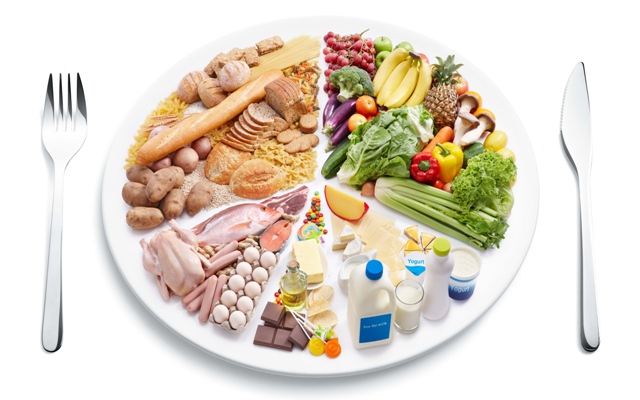
Both Katz and Meller claim that the best diet is the one that’s consisted of products that come from nature, a diet rich in veggies and fruits. They also advise people to stop eating processed food or follow a certain strict diet. Only a balanced, healthy diet rich in fruits and veggies can help you lose weight and improve your overall health.

post

The #1 Diet Mistake Women Make

It’s a matter of fats vs. fiction…

because it’s been a big fat lie.

Eggs…cheese…butter and bacon have been unfairly demonized for decades now.
blog2

And the truth is, that it’s all because of faulty science that was promoted in the 1950s by Ancel Keyes, PhD who was the first to link saturated fat with heart disease. We now know his research was seriously flawed. But, that didn’t stop the American Heart Association in 1961 from proclaiming the country’s anti-saturated fat guidelines, officially launching the big fat lie that many health experts are still promoting.

If you look back in cookbooks from the beginning of the century you’ll see that animal fats always prevailed. My mentor Dr. Parcells even used lard for cooking. My grandmother Clara favored “schmaltz” (chicken fat).

The no to low-fat, high carb diet has failed miserably.

Not only are we obese (a whopping 69% of us at least), but type 2 diabetes has skyrocketed and theBritish Medical Journal reported in 2013, “recent studies have not supported any significant association between saturated fat intake and risk of cardiovascular disease. Instead, saturated fat has been found to be protective.”

It turns out that my good friend, the late Dr. Atkins was right all along.

The carbs and starchy vegetables, grains, sugars and pastas are especially fattening because they promote the production of insulin, the kingpin of all hormones that socks away fat. And let’s not forget high fructose corn syrup or all the fructose in fruit which are notoriously for raising triglycerides, a blood fat that has been dramatically connected to heart disease.

So it’s time to forgo your dressing-less salads, broiled chicken breasts and card board-like rice cakes. Swap out those crackers for almonds or cashews. Get rid of the canola oil and use coconut oil, butter or ghee for cooking. The more organic, the better. And do consider a piece of brie instead of all that fruit you’re overly consuming. Just remember that higher fat foods are much more appetite-satisfying.

My 1999 book, Eat Fat, Lose Weight was the first to discuss how certain fats, especially the omega 3s, 6s and 9s from flax, fish and olive oils, avocados, nuts and seeds, can not only rev up your metabolism to help you lose weight, but can also help lower the risk of heart attacks, Alzheimer’s disease, arthritis, breast cancer, and even menstrual irregularities from PMS to perimenopause and beyond.

Now, with the latest research, you can add an extra dose of satiety to your diet with a little saturated fat—no longer a heart health no-no.

So, put saturated fats back on the table.

In addition to being cardio-friendly, they are blood sugar satisfying, helping to cut down on hunger and cravings. They also support and strengthen cell membranes and raise HDL (high density lipoproteins).

Just remember to get your saturated fat from the cleanest sources like grass-fed beef, butter, cream, omega-3 eggs, and coconut oil.

And, make sure you’re digesting them.

If you’re going to be adding more saturated fat to an already omega-rich Fat Flushing diet—one to two tablespoons of coconut oil, a couple of pats of butter, a tablespoon of cream—then by all means, do make sure you’re digesting it properly.

For most efficient absorption, assimilation and weight loss, you might consider adding lipase. This is a digestive enzyme secreted by the pancreas which breaks down fats and oils into small particles. In my testing, lipase is one of the most highly deficient enzymes for just about everybody.

Many of my clients who find that oils and fats repeat on them and have not been able to lose weight previously find that one to two capsules per meal is all it takes to budge the scale downwards and stop excess bloating and digestive distress. If this sounds like you, then you might want to call the good folks at UNI KEY Health (800-888-4353) who keep several extra bottles on hand for my clients and me. Lipase is not available online.

For those of you with gall stones or for those without a gallbladder, Cholacol would be my choice to provide the missing bile salts to help emulsify fats. This is a Standard Process product which UNI KEY can order for you if you cannot find it elsewhere. Cholacol contains a proprietary blend of 700 mg of bile salts with Collinsonia Root. It is considered a “must” for all of you that have had your gallbladder removed.

And of course there are still others that are deficient in bile. With protein meals that contain fat,HCL+2 would be my recommendation. The “Plus” refers to 50 mg of an ox bile extract.  The hydrochloric acid component triggers the gallbladder to dump bile, so less bile would be needed in the presence of hydrochloric acid than the straight bile salts.

It’s time to get smart about fat. I predict it will be the new mantra of all the latest diet books that are coming out in 2016.

One of my favorite healthy-fat recipes.

Avocados are not only a healthy source of saturated fat, but deliciously satisfying! And, as a bonus the flaxseed oil provides a hearty dose of omega-3s, too.

post

A More Alkaline Diet for Bone Health

For several years, there has been discussion about the influence foods can have on the acid-alkaline balance (or pH level) of blood in the body and on health, especially bone health. The theory is that a diet consisting mostly of food metabolized to acids—such as protein, processed foods, and cereals—may increase the acidity of blood. To counteract this change in pH, alkaline calcium compounds may leach from bones making them weak and brittle.

Thus, the dietary advice would be to eat a diet high in alkaline-producing foods—such as fruits and vegetables, which are metabolized to alkaline bicarbonates—to maintain a healthy pH level and preserve bone mass and density.

To explore the ideas behind the alkaline-acid balance theory, let’s start by reviewing some science about bones: Bones are a dynamic type of dense connective tissue that is in a constant cycle of degradation and regeneration. There are many factors that stimulate the building and breakdown of bones including low intake of calcium and vitamin D, lack of physical activity, and some medications.

Another reason for bone breakdown is to regulate the acid-base balance of blood, which must be maintained within the narrow range of 7.35 and 7.45. Bones are the storage banks for calcium and the degradation of bone results in the release of calcium, which has alkaline, or acid-neutralizing, properties. In other words, when the pH of blood starts to decrease or become more acidic, calcium can assist in increasing the pH or making it more alkaline.

What the research says

A study published in the Journal of Clinical Endocrinology found that subjects who received an alkaline compound (bicarbonate) in an amount equivalent to nine servings of fruits and vegetables daily experienced lower levels of calcium lost in urine as well as loss of N-telopeptide, a marker for bone resorption (1). This finding supports the notion that following the alkaline diet decreases calcium loss through urine, thus preserving bone.

Interestingly enough, other studies have shown that “acidic” high-protein diets, especially those comprised of dairy protein, actually have beneficial effects on bone mineral density (2-4). One study published in the Journal of Clinical Endocrinology and Metabolism concluded that diets higher in dairy protein in premenopausal women favorably affected important bone health markers (4). Another goes on to say that milk and dairy products, although considered acidic, neither produce acid upon metabolism nor cause a change in the acid-base balance of the body (5).

What’s the take-home message? While the science may have some conflicts, it is important to note that a diet high in fruits and vegetables is a safe and easy way to support bone health as well as other aspects of health. Additionally, diets higher in protein, especially dairy protein, are beneficial for maintaining bone health.

Alkaline-acid balance with Isagenix

By including IsaLean Shake and a combination of fruits and vegetables into your diet, it is possible to follow an acid-base balanced diet with Isagenix. Additionally, Isagenix products contain minerals like calcium, phosphorous, and boron as well as vitamins D and K2, which are all important for bone health.

It is also important to clarify that the content of a food doesn’t determine whether it is acid- or alkaline- producing in the body. For example, some foods (such as eggs) are alkaline in nature, yet acid-producing. Likewise, some acidic foods (such as citrus) are alkaline-producing. This is the reason why foods containing citric acid—such as Ionix Supreme and Cleanse for Life—are actually characterized as alkaline-producing.

For total nutrition that targets all aspects of bone health, look no further than Isagenix.

post

Go Online For The Finest Ingredients

If you live just around the corner from a farm shop which stocks the finest cuts of organic meat, vegetables, cheese and other goodies from local farms, you are lucky. If you dont, you should pay a visit to some of the farm shops and other fine food retailers which have sprung up online.

Since the supermarkets have come to dominate the marketplace for day to day groceries, the best online food shops have differentiated themselves by offering a specialist quality and variety which the supermarkets are unable to match. As a result, for dinner parties and special occasions, your best bet for top quality ingredients may be an online butchers or farm shop.

Take venison, for example. If you are lucky enough to find a supermarket which stocks venison, the range is likely to be limited. But if you go online, you can buy directly from the highly acclaimed Fletchers hill farm in Fife, where they stock a huge range of fine venison products from their own free range herd. This enables you to buy the finest venison joints, fillets, sausages and other products, confident not only of the quality but also of the ethical farming practices behind them.

Other online farm shops specialize in organic produce. For example, Graig Farm has picked up numerous organic food awards for its extensive range of organic meat, vegetables and other produce, sourced from a group of organic farms in mid-Wales.

For succulent meat of all kinds, from beef and lamb to wild game, free range poultry, fish and seafood, pay a visit to Donald Russell. The meat they supply will cost you more than supermarket meat, but the quality is outstanding. Indeed, they are so confident in their produce that they guarantee your money back if youve ever tasted better!

Most of us cannot afford to enjoy meals made with the finest ingredients every day of the week, but for parties, Christmas and other special occasions, you can afford to spoil yourself. For more top quality online food shops, have a browse around the food and wine quarter in Ootown, the online town.